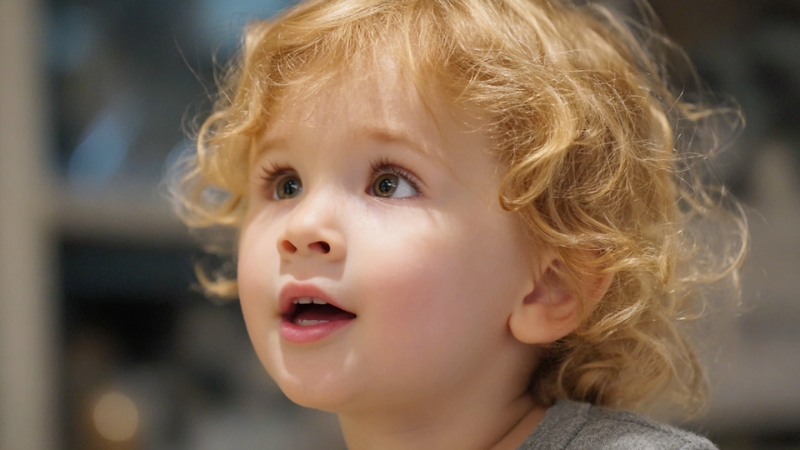
Parents often use “speech” to mean everything related to talking, but clinicians usually separate speech from language.
Speech is how words sound, including pronunciation, rhythm, and clarity. Language is the bigger system: understanding words, using them meaningfully, putting them together, answering questions, and taking part in conversation.
A child can have strong language but immature speech, or clearer speech but weaker language skills. That is why a 3-year-old who says a lot but drops sounds is a different situation from a 3-year-old who says very little at all.
At this age, “normal” does not mean polished. It means communication is moving forward in a clear way. A typical 3-year-old is not expected to pronounce every sound correctly. Many still simplify words, leave off endings, or mispronounce later-developing sounds.
What professionals want to see is steady growth in vocabulary, sentence length, ability to answer and ask simple questions, and enough clarity that communication works in real life.
What Most 3-Year-Olds Can Usually Do?
The clearest everyday markers at age 3 are social communication and functional language.
According to the CDC, by 3 years, many children can have at least two back-and-forth conversational exchanges, ask who, what, where, or why questions, tell you what is happening in a picture, say their first name, and talk well enough for others to understand them most of the time.
ASHA’s 3 to 4 year milestones add that children in this age range often answer simple who, what, where, and why questions, talk about at least one thing that happened during the day, use sentences that are getting longer, understand words for some colors and simple location words, and hear you from another room.
NIDCD milestones that bridge the late toddler period also help explain what many 3-year-olds are building from. In the 2 to 3 year range, children often have a word for almost everything, use two or three-word phrases, and are understood by family members and friends.
HealthyChildren notes that by 3 to 4 years, many children use 3-word sentences, tell stories, understand simple prepositions like on and under, and are around 75 percent understandable to strangers.
Area
What Is Common Around Age 3
What It Sounds Like In Real Life
Conversation
At least two back-and-forth exchanges
“I want juice.” “Apple juice?” “No, orange.”
Questions
Asks who, what, where, why
“Where does daddy go?” “Why dog barking?”
Sentence Use
Uses short phrases and 3-word sentences or more
“I want a big ball”
Naming And Describing
Says first name, labels actions in pictures
“Running.” “Baby sleeping.”
Understanding
Follows simple language and basic concepts
“Put it under the chair”
Intelligibility
Understood most of the time, though not perfectly
Familiar adults understand a lot, strangers understand much of it
These examples are built from CDC, ASHA, NIDCD, and AAP developmental guidance.
How Clear Should A 3-Year-Old Sound

This is the part parents worry about most. A 3-year-old is usually not expected to sound like a 5 or 6-year-old. It is common to hear sound substitutions, immature grammar, and simplified words.
HealthyChildren says children from 3 to 4 years may be about 75 percent understandable to strangers.
The CDC phrases it a bit more broadly, saying that by 3 years, children talk well enough for others to understand them most of the time. Those two ideas fit together: speech may still be immature, but it should usually work for daily communication.
That means some mistakes are normal. A child might say “wed” for red, “nana” for banana, or leave off a sound at the end of a word. That alone is not automatically a red flag.
Concern rises when speech is so unclear that even parents have trouble understanding, or when the child becomes frustrated because they cannot get their message across.
What Is Still Normal Variation At This Age

One reason parents get confused is that 3-year-olds vary a lot. Some speak in long, funny, advanced sentences, while others are still building basic sentence structure. A child may be strong in one area and slower in another.
For example, one child may understand everything but speak very little. Another may talk nonstop but be hard to understand. Another may speak clearly yet struggle to answer simple questions.
Milestones describe what most children do, but they are not strict performance targets for every individual child. The CDC explicitly says milestone checklists are not screening or diagnostic tools. If there is concern, the next step is formal screening or evaluation, not guessing from one checklist alone.
Normal variation also depends on context.
Children may speak more at home than in public, more with siblings than with unfamiliar adults, and more when relaxed than when tired. Some are naturally quieter. Temperament matters.
Even so, a shy child should still show real language skills somewhere: at home, during play, while reading books, or when talking about favorite things.
What Parents Often Notice First
Most parents do not sit around counting milestones. They notice patterns. They notice that another child the same age is chatting more. They notice they are translating for their child all the time.
They notice a preschool teacher saying, “He understands, but he does not say much,” or “She talks, but I cannot always make out the words.” Those real-life clues matter.
Communication problems often show up first in daily routines, not on forms.
Here are common signs parents describe before an evaluation:
These are not diagnoses by themselves, but they are reasonable signs to bring up with a pediatrician or speech-language pathologist.
Red Flags That Deserve Attention
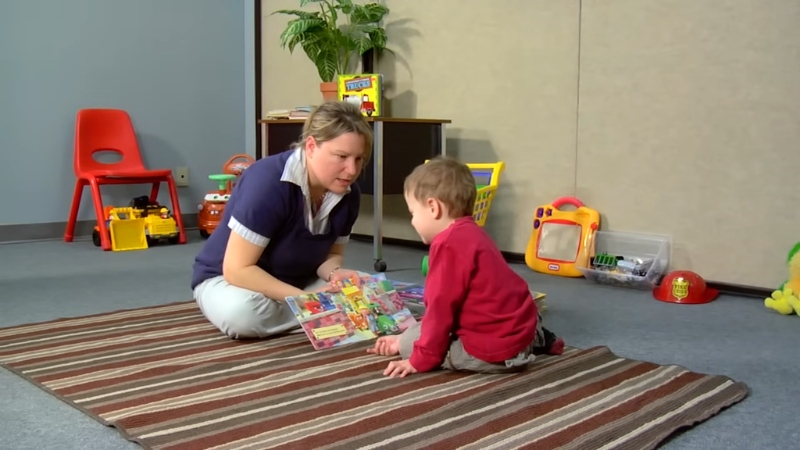
Some differences are mild and may simply need monitoring. Others justify acting sooner. At age 3, concern is stronger when a child is not using back-and-forth conversation, is not asking basic questions, is not speaking in short phrases or sentences, or is still very hard to understand most of the time.
It is also important to pay attention if the child seems not to understand everyday language, does not respond consistently to sounds, or has lost words or communication skills they used before. Skill loss always deserves prompt medical attention.
Language delay is common. HealthyChildren notes that delays in language are among the most common developmental delays, and says about 1 in 5 children learn to talk or use words later than other children their age.
Nationally representative federal data also show that nearly 1 in 12 U.S. children ages 3 to 17 has had a disorder related to voice, speech, language, or swallowing in the past 12 months.
What Is Usually Reassuring Vs What Needs A Closer Look
Situation
More Reassuring
More Concerning
Pronunciation
Some sound mistakes, but the message usually gets through
Speech is unclear most of the time, even to familiar listeners
Sentence Use
Uses short phrases and simple sentences
Mostly single words or very limited spontaneous speech
Understanding
Follows everyday directions and questions
Often seems confused by simple spoken language
Social Communication
Takes turns, comments, asks some questions
Rarely initiates or joins simple verbal exchanges
Progress Over Time
New words and skills keep appearing
Speech or language feels stalled for months
Hearing
Responds to sound and name consistently
Inconsistent response, frequent ear issues, concern for hearing
This comparison reflects milestone guidance from CDC, ASHA, AAP, and NIDCD, plus clinical warning signs emphasized in parent education materials.
Speech Delay, Language Delay, Or Something Else
@bbpsla Early support can make all the difference—don’t wait to get answers. Book a speech evaluation and help your child thrive socially and academically. 📧info@brightbeginningsla.com 🌐 brightbeginningsla.com 📞 323.525.0247 #SpeechDelay #EarlyIntervention #ChildDevelopment #ParentSupport #BBPSLA ♬ Dream Away – Ramol
Parents often assume “late talking” is a single issue, but several different things can look similar on the surface. A child may have a speech sound delay, which means they know what they want to say, but the words come out unclearly.
Another child may have a language delay, meaning they have more trouble understanding or using words and sentences. A child may also have hearing issues that reduce access to speech sounds, especially after repeated ear infections or persistent middle ear fluid.
NIDCD notes that developmental language disorder can interfere with learning, understanding, and using language, and that these difficulties are not explained by hearing loss or autism alone.
This is one reason internet comparisons can be misleading. Two children may both “not talk much,” but for completely different reasons. One may just be at the later end of normal development. Another may need speech therapy, hearing evaluation, or broader developmental screening.
What About Bilingual Or Multilingual Children
Children learning more than one language may distribute words across languages. That can make them look behind if someone counts only English words or only one language at a time.
HealthyChildren notes that if a child has a real speech or language problem, it will show up across the languages they use, not just in one.
That means bilingualism itself does not cause a communication disorder, though it can change how vocabulary is expressed across settings. A good evaluation should consider the child’s full language environment, not just one language sample.
What Parents Can Do At Home
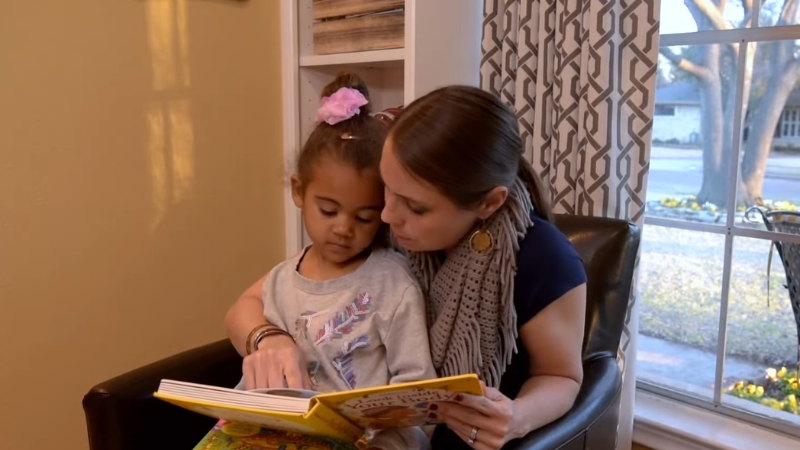
Parents do not need flashcards, pressure, or marathon teaching sessions. The most helpful support at age 3 is usually repeated, responsive language during ordinary life. Talk during meals, baths, dressing, errands, and play.
Expand what your child says. If they say “dog run,” you can say, “Yes, the dog is running fast.” Read picture books and pause to ask what is happening.
Give choices that invite speech, like “Do you want an apple or a banana?” Keep screens from replacing conversation. Real interaction is what builds language. These ideas are consistent with AAP and speech-language guidance for supporting communication development.
It also helps to listen for patterns instead of isolated moments. Every 3-year-old has tired days, clingy days, and quiet days. What matters is the overall trend over weeks and months.
Are new words appearing? Are sentences getting a little longer? Is the child asking more, telling more, and joining more? Progress does not need to be dramatic to be real.
When To Bring It Up With The Pediatrician
Bring it up sooner rather than later if you are repeatedly wondering about it. The CDC encourages parents to act early when there is concern.
HealthyChildren also advises that formal developmental screens should be done whenever there is a concern about development, not only at routine ages. For a 3-year-old, a pediatrician may review milestones, check hearing history, consider broader developmental screening, and refer for speech-language evaluation if needed.
A hearing check matters more than many parents realize. Temporary hearing loss from congestion, ear infections, or middle ear fluid can interfere with how clearly children hear speech, and hearing issues can directly affect speech and language development.
HealthyChildren notes that many children experience mild, temporary hearing loss with fluid or infection in the middle ear.
What Happens If A Child Needs Help
Referral does not mean something is seriously wrong. It means the question deserves a real answer. A speech language pathologist may look at how the child understands language, uses words and grammar, plays, makes speech sounds, and communicates socially.
Since the COVID pandemic, there has been a dramatic increase in the number of young children who are slow to develop language skills, with pediatric speech delays more than doubling for children aged 12 and younger. https://t.co/ZPeIT00Zve
— PBS News (@NewsHour) January 8, 2024
If a problem is found, early support can make communication easier during a stage when language is developing quickly. Federal data show that more than half of U.S. children ages 3 to 17 with a voice, speech, or language disorder received intervention services in the past year.
For preschool-age children, services may come through outpatient therapy, early childhood programs, or school-based systems, depending on age, location, and eligibility.
HealthyChildren notes that an IEP can include speech or language therapy and measurable goals when school services are appropriate.
Practical Examples Of Typical Age 3 Communication
Everyday Situation
What Many 3-Year-Olds Can Do
Looking at a picture book
Say what someone is doing: “Eating,” “sleeping,” “jumping”
Snack time
Ask for what they want with words or short sentences
Play
Comment, label toys, protest, request help, pretend talk
Family conversation
Answer simple questions and join for a few turns
Preschool routine
Follow simple directions like “Put your cup on the table”
Meeting new people
May be shy, but can usually communicate basic wants and needs
These examples reflect how CDC and ASHA milestones show up in ordinary daily life.
The Bottom Line
View this post on Instagram
A normal 3-year-old speech profile is not flawless. It is active, useful, and clearly developing. Most children this age are using short sentences, asking simple questions, participating in brief back-and-forth conversations, understanding everyday language, and speaking clearly enough that other people understand them much of the time.
Some sound errors and unevenness are still expected.
What is less reassuring is very limited speech, poor understanding, speech that is unclear most of the time, or little progress over several months. In those cases, it is worth raising the issue early rather than waiting and hoping it disappears on its own.