
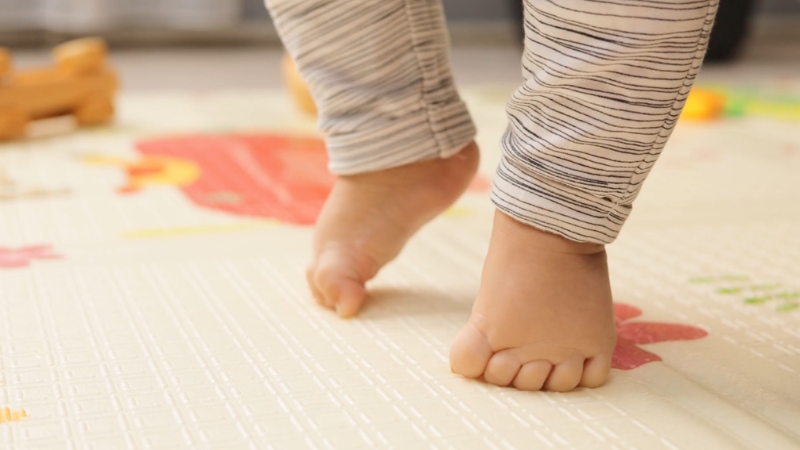
Low muscle tone in infants, also called hypotonia, usually shows up as a baby who feels unusually floppy, has trouble holding their head up, seems less able to push against gravity, or reaches physical milestones more slowly than expected.
A baby with low muscle tone may feel like they “slip through” your arms when held, lie with arms and legs more loosely extended than other babies, have a weak suck, and show delays with tummy time, rolling, sitting, or staying upright.
Low muscle tone is not a diagnosis by itself. It is a sign that can have many causes, from mild and temporary developmental variation to neurological, genetic, muscle, or metabolic conditions, which is why persistent signs should be assessed by a pediatrician.
The Most Noticeable Early Signs
One of the clearest signs is floppiness when held. Parents often describe it as feeling like the baby is hard to gather up securely because the body does not hold itself together well. Instead of a more flexed newborn posture, the arms and legs may hang more loosely.
The head may fall backward, forward, or to the side because neck control is weak. These are classic early descriptions of hypotonia in infancy.
Another common sign is poor head control. All babies develop head control gradually, but low tone makes that process harder.
During tummy time, the baby may struggle to lift the head, keep it centered, or hold it up for more than a brief moment. When pulled gently from lying toward sitting, the head may lag much more than expected.
Limited head control is one of the signs repeatedly noted in medical sources on infant hypotonia and in conditions such as spinal muscular atrophy, where low tone can be present in the first months of life.
A third sign is difficulty with feeding. Babies with low tone may have a weak suck, poor coordination during feeding, tire quickly, or have trouble swallowing effectively. Some do not gain weight as expected because feeding takes more effort and is less efficient.
Medical references on infant hypotonia and several genetic conditions associated with hypotonia list feeding difficulty as an important early clue, especially when it appears together with floppiness and delayed development.
Movement and Development Signs Parents Often Notice

Low muscle tone often becomes more obvious through motor delay. A baby may be late to hold the head steady, push up during tummy time, roll, sit without support, crawl, or pull to stand. This does not automatically mean there is a serious disorder, but a persistent delay combined with floppiness deserves attention.
Boston Children’s Hospital specifically notes that infants with hypotonia may lag in fine and gross motor milestones such as holding the head up, balancing, and sitting without falling over.
Parents may also notice that the baby seems to move less vigorously. The kicks may feel weaker, the baby may not push strongly into the caregiver’s shoulder, and there may be less spontaneous antigravity movement.
In some conditions tied to hypotonia, infants are described as having low energy, a weak cry, and reduced movement. This pattern matters more when it is consistent rather than occasional.
Posture can also look different. Instead of a tucked, flexed posture, a baby with low tone may lie in a more spread-out way, with less resistance in the limbs. During handling, diaper changes, or dressing, the body may feel unusually relaxed rather than springy.
MedlinePlus specifically notes that infants with hypotonia often rest with elbows and knees loosely extended, which can be a visible clue even before larger developmental delays are clear.
Common Signs At A Glance
Sign
What It May Look Like
Floppiness
Baby feels limp or “rag doll” like when picked up
Poor head control
Head falls back, forward, or to the side
Loose posture
Arms and legs rest more extended, with less natural flexion
Feeding trouble
Weak suck, tiring during feeds, and swallowing difficulty
Motor delay
Late tummy time progress, rolling, sitting, crawling
Reduced resistance
Little pushback when moved or repositioned
Weak cry or low energy
Less vigorous movement or less robust feeding behavior
These signs are commonly described in pediatric sources on infant hypotonia, though not every baby will show all of them.
What Low Muscle Tone Does Not Always Mean

Low muscle tone does not always mean severe muscle disease, and it does not automatically mean a baby will have intellectual disability or long-term disability. Some infants have benign or less progressive forms of hypotonia, and some children improve significantly with time and therapy.
Boston Children’s Hospital notes that some cases are nonprogressive and of unknown origin, sometimes referred to as benign congenital hypotonia, and that some children acquire motor skills more slowly but continue to progress.
At the same time, hypotonia can also be a sign of more serious problems involving the brain, nerves, muscles, genetics, or metabolism.
Possible Causes Behind Low Tone
The causes are broad. Low tone can come from central nervous system issues, where the brain or spinal cord is involved, or from peripheral causes, where the nerves, neuromuscular junction, or muscles themselves are affected.
It can also appear in genetic syndromes, after birth complications such as hypoxic-ischemic injury, in metabolic disorders, or in neuromuscular conditions such as spinal muscular atrophy.
Medical references on infant hypotonia repeatedly point to this wide range of possibilities, which is why doctors do not rely on appearance alone.
Some examples from authoritative medical sources include spinal muscular atrophy, which can present in the first six months with low tone, limited head control, and feeding or breathing difficulty, as well as genetic and metabolic disorders that may include hypotonia along with poor growth, seizures, or vision and hearing problems.
The point is not that these conditions are common in every floppy infant, but that the sign deserves proper context.
When Parents Should Pay Closer Attention
View this post on Instagram
A single “soft” moment or a baby having an off day is not usually the issue. What matters is a pattern. Concern rises when the floppiness is persistent, head control is clearly poor for age, feeding is difficult, the baby is not gaining weight well, or milestones are noticeably behind.
Extra concern is warranted if low tone comes with a weak cry, breathing difficulty, seizures, unusual eye movements, reduced alertness, or loss of skills that were already present. These combinations are more likely to suggest an underlying neurological or neuromuscular problem.
When To Call A Doctor Promptly
Parents should contact a pediatrician if an infant seems persistently floppy, has trouble feeding, struggles to hold the head up, is not meeting expected movement milestones, or feels very different from other babies in terms of muscle firmness and control.
Same-day or urgent care is more appropriate if the baby has trouble breathing, is very sleepy or hard to wake, is feeding poorly enough to risk dehydration, or shows seizures or sudden decreased responsiveness. Some causes of hypotonia need rapid evaluation, especially when breathing, swallowing, or neurological status is involved.
How Doctors Evaluate It
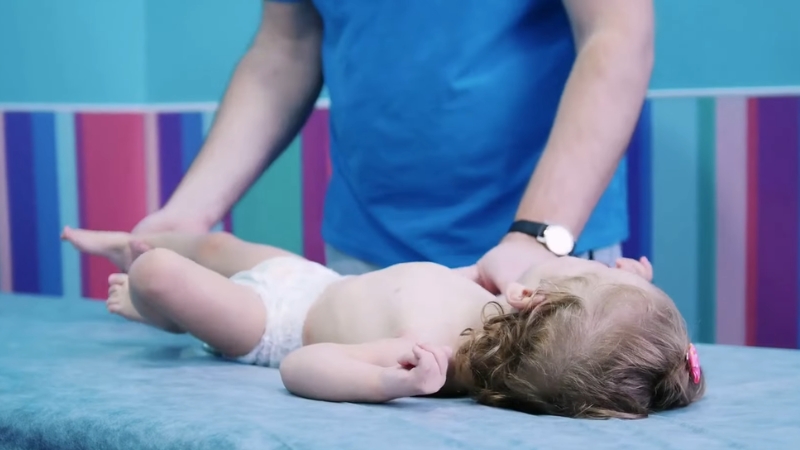
A pediatrician usually starts with a physical and neurological exam. They look at posture, reflexes, alertness, head control, limb resistance, feeding, and developmental progress.
Depending on what they see, they may refer the baby to neurology, genetics, or developmental specialists. In some cases, testing may include blood work, brain imaging, genetic testing, or evaluations for neuromuscular disease.
What Treatment Usually Looks Like
Treatment depends on the cause. There is no single treatment for low tone itself. Some babies need feeding support, some need physical or occupational therapy, some need neurologic treatment, and some need broader care for an underlying genetic or metabolic disorder.
Even when there is no cure for the underlying condition, early supportive therapy can help with posture, motor skill development, feeding, and everyday function. That is one reason early assessment matters.
Bottom Line
@babystepstherapyrgv Low tone babies need strength! 💪🏽 Hypotonia is a specialty of ours! We focus on creating stability so your baby can move with confidence. If you’re concerned, reach out ❤️ #hypotonia #babydevelopment #TikTokEncyclopediaContest ♬ Walking Around – Instrumental Version – Eldar Kedem
The main signs of low muscle tone in infants are floppiness, poor head control, loose posture, feeding difficulty, and delayed motor milestones. A baby may feel limp when held, struggle with tummy time, tire during feeding, and take longer to develop basic movement skills.
Sometimes hypotonia is mild and nonprogressive. Sometimes it points to a neurological, genetic, or muscle-related condition that needs prompt medical attention. Persistent signs should be checked by a pediatrician rather than watched indefinitely.