
At age 2, a child who says fewer than 50 words and is not yet combining two words may fall into the late talker category, but that does not automatically mean something is seriously wrong.
The text makes a clear distinction between a child who is simply late to start talking and a child with a broader language or developmental issue.
What matters most is not only how many words the child says, but also whether they understand language, respond to their name, point, make eye contact, follow simple directions, and engage socially.
Many late talkers do catch up, especially when comprehension and social development are strong, but some children need early support because speech delay can also be linked to hearing problems, autism, or wider developmental delays.
What “Normal” Actually Looks Like at Age 2 (The Real Numbers)
Here’s the thing about developmental milestones: they are medians and ranges, not pass/fail cutoffs. The CDC’s 2022 revised milestones represent what 75% of children can do by a given age, not 100%, and not 50%. This means about 1 in 4 kids won’t have hit a specific milestone at exactly that age and may still be perfectly fine.
That said, there are real warning signs.
Skill
What the Research Says
Vocabulary size
At least 50 words (some studies cite 200+ as typical)
Word combinations
Using 2-word phrases (e.g., “more milk,” “daddy go”)
Vocabulary growth rate
Adding ~10 new words per week during the “vocabulary explosion”
Intelligibility to strangers
~50% of speech is understood by unfamiliar adults
Intelligibility to parents
~75–100% of speech understood by caregivers
Points to body parts
Names 2+ body parts when asked
Follows 2-step instructions
E.g., “Get your shoes and bring them here”
Uses words more than gestures
Relies primarily on words, not just pointing
If your child has fewer than 50 words AND isn’t combining any words yet at 24 months, that places them in what researchers call the “late talker” category.
Late talkers make up roughly 13–17% of all 2-year-olds, according to a population study by Rescorla (2002) in the Journal of Speech, Language, and Hearing Research.
So right off the bat, you are not alone, and it doesn’t automatically mean something is wrong.
The Difference Between a Late Talker and a Language Disorder

This is the distinction that most parenting websites gloss over, and it matters enormously.
A late talker is a child who has a delay in the expressive side of language (what they say out loud) but who understands language fairly well and is developing social skills normally. They point, they make eye contact, they respond to their name, and they follow along when you tell them something. They just aren’t producing many words yet.
A language disorder (or language delay, if it’s milder) involves deficits in receptive language (understanding), expressive language, or both, and it may be connected to hearing loss, autism spectrum disorder, developmental disorders, or other underlying conditions.
The research on late talkers is actually somewhat reassuring: Rescorla’s follow-up studies tracked late talkers through adolescence and found that the majority “caught up” to peers by school age, particularly those who had strong comprehension skills.
Her 2002 paper in Journal of Speech, Language, and Hearing Research found that by age 17, late talkers had only small, residual differences in language compared to typical peers, though they did show slightly weaker performance on some measures of verbal memory and grammar.
But here’s the critical nuance: “Wait and see” is only appropriate in some cases. Children who have both expressive and receptive delays, or who have other developmental red flags, need to be evaluated, not watched and waited on.
Feature
Late Talker (Expressive Delay)
Broader Language Delay
Vocabulary at 24 months
<50 words
Often <20 words, may have very few
Understanding of language
Normal, follows directions, understands questions
Below expected for age
Two-word combinations
Absent or just emerging
Absent, often no intentional communication
Social engagement
Normal, eye contact, joint attention, pointing
May be reduced or inconsistent
Play skills
Symbolic play present (feeding a doll, pretending)
May be limited to functional/sensory play only
Response to name
Responds reliably
May not respond consistently
Hearing
Normal
Check first , hearing loss is a common cause
Family history of late talking
Often yes
Not always
The Most Common Causes of Late Talking at Age 2
Let’s go through these one by one, because there is no single answer.
1. It’s Just How They’re Wired (Idiopathic Late Talker)
Some kids are late talkers for no identifiable reason. They have normal hearing, normal comprehension, and normal social development; they just start talking later.
There’s evidence of a genetic component: a family history of late talking or reading difficulties is one of the most consistently identified risk factors (Zubrick et al., 2007, Pediatrics).
These kids are the ones who tend to “catch up” without intervention, though early speech therapy is still often recommended because it speeds things up and reduces the risk of later reading difficulties.
2. Hearing Loss
This one gets missed more than it should. Even mild, fluctuating hearing loss, the kind that comes from repeated ear infections and fluid behind the eardrums (otitis media with effusion), can meaningfully disrupt language development. A child can pass a newborn hearing screen and still develop hearing issues by age 2.
If your child isn’t talking at 2, get a formal audiological evaluation. Not just a pediatric hearing screen with a noisemaker in the office. A full evaluation by an audiologist.
The American Academy of Otolaryngology estimates that roughly 80% of children will have at least one ear infection by age 3. If your child has had recurrent infections, this warrants a conversation with an ENT.
3. Autism Spectrum Disorder (ASD)
Language delay is one of the early signs of ASD, and ASD affects about 1 in 36 children in the U.S., according to the CDC’s 2023 ADDM Network report. It is now the most commonly diagnosed developmental disability in childhood.
Important: not all children with ASD are non-verbal or minimally verbal. Many have normal or near-normal speech but still meet criteria for ASD based on social communication differences, repetitive behaviors, or sensory sensitivities.
Conversely, not all late talkers have ASD. The overlap is significant enough that any child with a language delay should be screened for ASD, but a language delay alone doesn’t mean your child is autistic.
Signs in a 2-year-old that suggest ASD alongside language delay include:
The M-CHAT-R/F (Modified Checklist for Autism in Toddlers, Revised with Follow-Up) is the validated screening tool used at 18 and 24-month well-child visits. It’s worth knowing this exists so you can ask your pediatrician to administer it if they haven’t.
4. Global Developmental Delay
Some children have delays across multiple developmental domains: motor, cognitive, language, and social. When delays are broad rather than isolated to speech, it points toward an underlying condition that needs comprehensive evaluation.
Causes can include genetic syndromes, prematurity, brain injury, metabolic conditions, and others.
5. Environmental and Social Factors
Language development doesn’t happen in a vacuum. Children learn to talk by having real, back-and-forth interactions with adults who respond to them.
Research by Hart & Risley (1995) in Meaningful Differences in the Everyday Experience of Young American Children documented the famous “30 million word gap”, the difference in words heard by children in lower-income versus higher-income families.
While that specific 30 million number has been debated and somewhat revised, the core finding, that the quantity and quality of language input matter, has been replicated many times.
Risk factors in the environment include:
6. Bilingual and Multilingual Development
One of the most common things parents in bilingual households are wrongly told: “Your child is confused by two languages.” Children are not confused by two languages. They are fully capable of learning two languages simultaneously from birth.
View this post on Instagram
What is true is that bilingual children may have smaller vocabularies in each individual language when measured separately. When you add together their vocabularies in both languages (total conceptual vocabulary), they’re typically on par with monolingual peers (Pearson et al., 1993, Language Learning).
If your child is growing up with two languages and seems like a late talker, a speech-language pathologist who assesses them in both languages is essential. Assessing only in one language will give you an artificially low score.
Red Flags That Should Not Wait for the 2-Year Checkup
The following signs warrant immediate evaluation regardless of age:
Red Flag
What It May Indicate
No babbling by 12 months
Hearing loss, ASD, global delay
No pointing or waving by 12 months
ASD, global delay
No single words by 16 months
Hearing loss, ASD, language disorder
No 2-word phrases by 24 months
Language delay, ASD
Any loss of language skills at any age
Requires urgent evaluation, can indicate Landau-Kleffner syndrome, ASD regression, or other neurological issues
Doesn’t follow any simple directions by 12 months
Hearing loss, receptive language delay
Not responding to name by 12 months
ASD, hearing loss
No social smile by 6 months
ASD, global developmental concerns
The regression piece is critically important. If your child had words and lost them, even a handful of words, even briefly, that needs to be taken seriously and evaluated promptly, not attributed to a cold or a busy week.
What Evaluation Actually Looks Like
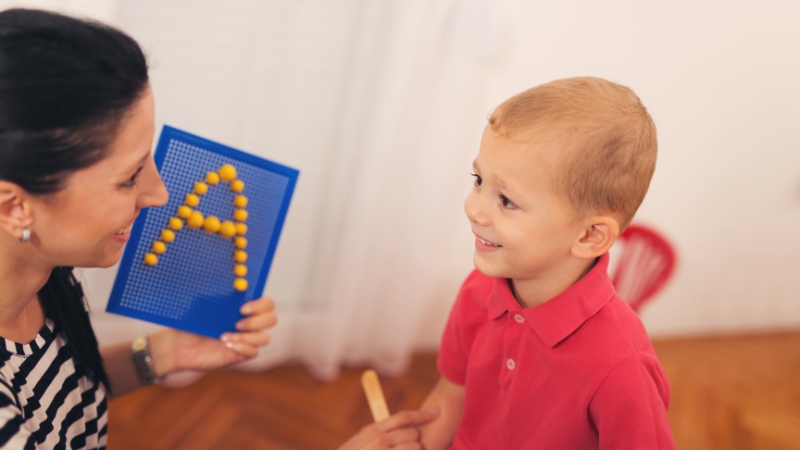
If you’re concerned, here’s the path forward.
Step 1: Hearing test. Rule out hearing loss first. Ask your pediatrician for a referral to an audiologist (not just an in-office screen).
Step 2: Speech-language evaluation. A speech-language pathologist (SLP) will assess both receptive and expressive language. They’ll use standardized assessments (common ones include the Preschool Language Scale-5, Receptive-Expressive Emergent Language Test, or Rossetti Infant-Toddler Language Scale) as well as observations of natural interaction. This typically takes 60–90 minutes.
Step 3: Developmental pediatrician or early intervention. In the United States, children under 3 are entitled to free early intervention services through the Individuals with Disabilities Education Act (IDEA), Part C.
You do not need a doctor’s referral to self-refer. You can contact your state’s early intervention program directly and request an evaluation. If the evaluation finds delays, services, including speech therapy, are provided free of charge, in your home or a childcare setting.
After age 3, services transition to the school district under Part B of IDEA.
Step 4: Rule out ASD and other causes. Depending on the findings, an evaluation by a developmental-behavioral pediatrician, pediatric neurologist, or autism specialist may be recommended.
Professional
What They Assess
How to Access
Audiologist
Hearing
Pediatrician referral or direct
Speech-Language Pathologist (SLP)
Receptive & expressive language, articulation
Early intervention (free under 3), school district (free 3+), or private
Developmental-Behavioral Pediatrician
Broad developmental profile, ASD
Pediatrician referral (often a wait)
Pediatric Neurologist
Neurological causes, seizure disorders
Pediatrician referral
Occupational Therapist (OT)
Sensory processing, fine motor (if co-occurring concerns)
Referral or self-pay
Early Intervention Program
Comprehensive evaluation and services for under-3
Self-refer, call your state’s program directly
What You Can Do Right Now at Home

Speech therapy is evidence-based and important. But between now and when services start (and alongside them), there is a lot parents can do.
The research on what works is actually pretty consistent. Strategies drawn from the Hanen Program’s It Takes Two to Talk curriculum, developed at the Hanen Centre in Toronto and validated in multiple studies, include the following:
OWL: Observe, Wait, Listen. Before jumping into filling the silence, give your child time to initiate communication. Most adults talk to children rather than with them. Watch what your child is interested in, wait for them to look at you or make a sound, and respond to that.
Follow your child’s lead. Forget the flashcards. Language is learned in context, during activities the child chooses. If they’re obsessed with pushing a toy truck, that’s the learning moment. Get down on the floor and talk about the truck.
Expand what they say. If your child says “dog,” you say “big dog” or “dog running.” If they say “more,” you say “more juice?” This technique is called expansion in the research literature and is one of the most studied strategies for building language in late talkers (Fey et al., 2003, American Journal of Speech-Language Pathology).
Reduce questions, increase comments. “What’s that?” seems educational, but it puts a child on the spot. Comments are more helpful: “Oh, that’s a bus. The bus is going fast.” Questions that have an obvious answer (that you both know) build less language than commenting alongside a child.
Read together, but not the way you might think. Dialogic reading, where the adult asks open-ended questions and lets the child lead the “reading,” is more effective than just narrating the story. Whitehurst et al. (1988) showed that dialogic reading significantly boosted language scores in 2-year-olds after just one month of parent training.
Limit background TV. Even TV that isn’t directed at the child has been shown to reduce the quantity and quality of adult-child verbal interaction.
A study by Christakis et al. (2009) in the Archives of Pediatrics & Adolescent Medicine found that for every hour of adult TV in the background, children heard 770 fewer adult words. Over a day, that adds up fast.
Evidence-Based At-Home Strategies Summary
Strategy
What to Do
OWL
Observe, Wait, Listen before speaking
Expansion
Add one or two words to what they say
Parallel talk
Narrate what your child is doing
Self-talk
Narrate what you are doing while near the child
Reduce questions
Comment more, quiz less
Dialogic reading
Interactive book reading with child participation
Reduce background media
Increases adult-child verbal interaction
Follow the child’s lead
Talk about what interests them, not a lesson plan
The “Wait and See” Debate
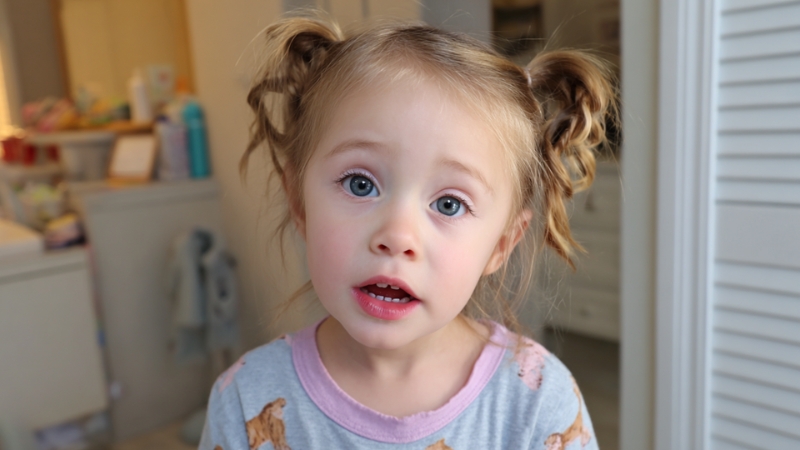
You may be told, probably by a well-meaning relative or even a pediatrician, to “just wait, Einstein didn’t talk until he was four.” (This is almost certainly apocryphal, by the way.)
Here’s the research on waiting:
For true late talkers with normal comprehension and no other red flags, some studies do support that many will catch up by age 4–5. Ellis Weismer et al. (1994) found that roughly 50–60% of late talkers at 24 months caught up by kindergarten without intervention.
But here’s the problem with “wait and see” as a blanket strategy: you don’t know at age 2 whether your child is a true late talker who will catch up, or a child with a language disorder that will persist.
Early intervention has good evidence behind it and, under IDEA, costs nothing. There is no downside to evaluation and no evidence that early speech therapy harms late talkers who would have caught up anyway.
The American Academy of Pediatrics (AAP), the American Speech-Language-Hearing Association (ASHA), and the CDC all recommend early referral for children who aren’t meeting language milestones. “Wait and see” is not official guidance from any of those organizations.
There is also an argument from neuroscience: the first three years of life are a period of intense synaptic development, and the brain is arguably more plastic during this window than it will ever be again. Waiting until age 3 or 4 to begin intervention means working with a brain that is somewhat less malleable.
Whether this has measurable clinical significance in late talkers is debated, but it is a reasonable argument for acting sooner rather than later.
A Note on Anxiety and What You’re Actually Dealing With
@bratbustersparenting Is your two-year-old still not talking? #toddler #toddlertalking #parent #parentingtoddlers #parentingtips #parenting #parentingwisdom #parentadvice #tipsforparents ♬ original sound – Lisa Bunnage – Parenting Coach
This section isn’t backed by a journal citation. It’s just real.
When your kid isn’t talking, the fear is rarely just about speech. It’s about everything speech represents: connection, independence, school, friendships, and being understood. You are imagining your child at five, at ten, at twenty. You are projecting. That’s human and completely understandable.
What’s worth holding onto: the range of outcomes for children who are identified and supported early is genuinely good. Children who receive early intervention for language delays do better than those who don’t.
Children whose parents learn to interact in more language-rich ways make faster progress. The fact that you are Googling this, that you are reading a 3,000-word article about it, is itself an indicator that you are the kind of parent whose kid is going to be okay.
That doesn’t mean there’s nothing to address. It means the addressing can start now, and starting now is the right move.