

Sensory overload in children happens when the brain takes in more input than it can organize comfortably. That input may come from noise, lights, crowds, textures, smells, movement, touch, or several things hitting at once.
The result is not just “bad behavior.” It can look like panic, irritability, covering ears, refusing clothes, bolting from a room, crying, shutting down, or melting down over something adults barely notice.
The concrete point parents need to know is this: sensory overload is usually a nervous-system problem before it becomes a behavior problem.
The most useful response is not to lecture in the moment. It is to reduce input, help the child regulate, and then look for patterns so the same trigger does not keep blowing up the day.
Sensory sensitivities are common in autistic children, but children without autism can also have sensory difficulties.
What Sensory Overload Actually Means

Children are constantly taking in sensory information. Most of the time, the brain sorts it in the background. But some children react more strongly to certain types of input, or have a harder time filtering what matters and what does not.
A fluorescent classroom, a scratchy clothing tag, a crowded birthday party, the hum of an air conditioner, and a strong food smell may all pile up until the child cannot cope well anymore. What adults see at the end is often the crash, not the build-up.
Child Mind Institute describes these children as sometimes being oversensitive, meaning ordinary sounds, lights, textures, or touch feel much more intense than they do to other people.
This is why sensory overload can be so confusing to adults. The trigger may seem small, but the child’s body is reacting as if the environment has become too loud, too bright, too close, or too unpredictable.
NHS sensory guidance also emphasizes that the first step is understanding the behavior rather than dismissing it, because what looks like defiance can actually be a sensory response.
Common Signs Of Sensory Overload
Sensory overload does not look the same in every child. Some children get louder and more agitated. Others go quiet, freeze, or seem to disappear into themselves.
A useful way to think about it is that overload can show up as fight, flight, or shut-down.
Common Signs Parents Often Notice
Type Of Sign
What It Can Look Like
Noise sensitivity
Covering ears, crying at vacuum cleaners, hand dryers, alarms, shouting, or crowded rooms
Touch sensitivity
Refusing certain clothes, melting down over socks, tags, seams, hair brushing, toothbrushing, or surprise touch
Visual overload
Squinting, avoiding bright places, distress in busy shops or classrooms, difficulty in cluttered spaces
Movement stress
Fear of swings, slides, escalators, or fast motion
Behavior changes
Irritability, yelling, tantrums, bolting, aggression, refusing tasks, and sudden crying
Shut-down signs
Going silent, hiding, curling up, staring, not answering, seeming “checked out.”
Body signs
Fast breathing, sweating, pale face, pacing, fidgeting, restlessness
These signs line up with pediatric and OT guidance describing children who cannot tolerate bright lights, loud noises, scratchy clothing, surprise touch, or overwhelming environments, and with NHS guidance noting fidgeting, covering ears, pacing, and faster breathing as early warning signs.
What Sensory Overload Can Look Like In Real Life

In real homes and classrooms, sensory overload often shows up in predictable situations. A child may seem fine all morning and then explode in a supermarket.
Another may unravel every time it is time to get dressed. Another may come home from school and melt down over a tiny request because they spent the entire day holding it together in a noisy environment. Those patterns matter.
A child who screams when their face gets wet, refuses certain fabrics, crashes into people, or constantly seeks intense input may be showing sensory processing differences rather than random stubbornness.
Child Mind Institute points out that some children are oversensitive, while others are under-sensitive and seek stronger input, such as tight hugs, spinning, or crashing movement.
The Difference Between A Tantrum And Overload
Parents often want to know whether a child is “just acting out” or truly overwhelmed. Real life is messy, and both can happen. But overload usually has a different feel. The child often looks distressed, not strategic.
They may not calm down when offered a reward or consequence. They may become less verbal, less organized, and less able to follow directions. The behavior often ends only when the input is reduced, and the body begins to settle.
The American Academy of Pediatrics’ stress guidance is helpful here: first regulate, then relate, then reason.
That sequence fits sensory overload very well. When a child’s nervous system is flooded, explanation and discipline usually work poorly until calm returns.
Common Triggers
View this post on Instagram
Some triggers are obvious. Others build quietly through the day until one final thing tips the child over.
Frequent Sensory Triggers In Children
Trigger
Why It Can Be Hard
Loud or sudden noise
Hard to filter, startling, and physically painful for some children
Bright lights
Feels harsh, tiring, or disorienting
Crowds
Too much noise, movement, unpredictability, and touch at once
Clothing textures
Seams, tags, tight waistbands, socks, or certain fabrics can feel unbearable
Transitions
Sensory changes plus emotional demand happen together
Smells
Perfume, cleaning products, cafeteria smells, food odors
Grooming tasks
Hair brushing, nail cutting, bathing, toothbrushing
School environments
Constant background noise, visual clutter, and group demands
Hunger or fatigue
Lower tolerance for input and frustration
NHS and Child Mind Institute guidance repeatedly points to noise, texture, clothing discomfort, touch, grooming tasks, and busy environments as common sources of distress.
What To Do In The Moment
The best immediate response is usually simpler and quieter than parents expect. During overload, the child’s system is already overfull. Adding more words, more questions, or sharper demands often makes it worse.
A useful in-the-moment plan looks like this:
This matches NHS occupational therapy guidance that recommends moving to a calm space, reducing talking, offering water or a chewy snack, using breathing support, and saving discussion for later.
Solutions That Actually Help Long Term
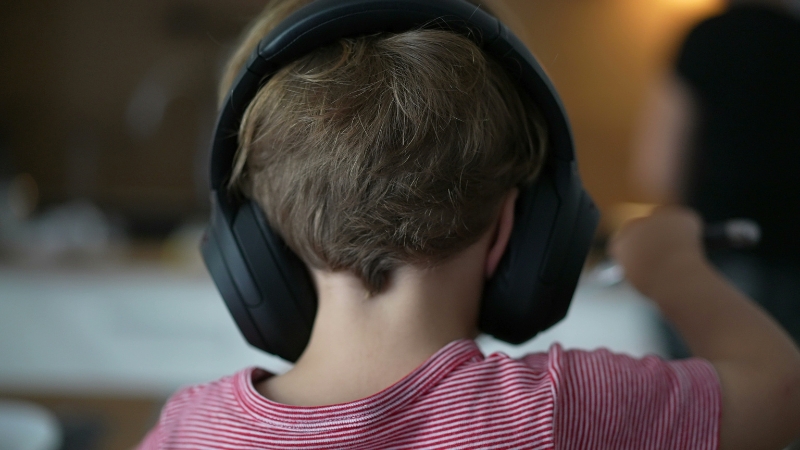
The biggest mistake adults make is treating sensory overload only as a discipline issue. The better long-term strategy is to reduce predictable triggers and build a plan around the child’s pattern. That often means changing the environment, not trying to “teach toughness” through repeated overwhelm.
Some of the most practical solutions are environmental. If clothing is a repeated battle, focus on softer fabrics, fewer seams, and cutting out nonessential discomfort. If noise is the issue, noise-reducing headphones, quieter timing, or strategic breaks may help.
If transitions are the problem, visual schedules and warnings can reduce the shock of switching states. NHS sensory-friendly guidance also stresses predictable environments and letting children know what to expect.
Calming Tools That Often Work
Not every strategy fits every child, but some tools come up again and again because they reduce input or help the body organize itself better.
Practical Tools And When They Help
Tool
Best Used For
Noise-reducing headphones
Shops, assemblies, travel, hand dryers, vacuuming
Calm corner or quiet space
Recovery after overload starts building
Visual schedule
Children who struggle with transitions and uncertainty
Sunglasses or a cap
Bright outdoor light or visual strain
Fidget or sensory object
Waiting, travel, stressful environments
Deep pressure if the child likes it
Calming the body, especially after an overload, starts
Movement breaks
Children who become agitated from sitting still for too long
Snack and water
Lowering added stress from hunger and thirst
NHS OT material specifically mentions deep pressure activities, sensory bags, calm spaces, and predictable supports, while clinical guides emphasize breaks and practical tools during outings.
Deep pressure can help some children, though the NHS also notes it can overstimulate others, so it has to fit the child.
At Home, The Goal Is Pattern Recognition

The greatest long-term improvement often comes from noticing patterns. Many children do not overload randomly.
They overload at predictable times: after school, in bright stores, during hair washing, during family gatherings, or when tired and hungry. A parent who tracks what happened before the episode usually starts seeing a pattern quickly.
Useful questions include: Was the space loud? Was there a clothing issue? Was the child hungry, tired, sick, or rushed? Was there a transition without warning? Did several smaller irritants pile up first?
Once the pattern becomes visible, solutions become much more concrete. Instead of saying “my child always melts down,” you can say, “my child melts down in noisy indoor places after long school days when they have not had a break.” That is something you can plan around.
At School, Support Usually Works Better Than Pressure
School can be one of the hardest places for children with sensory differences because it combines noise, visual clutter, unpredictable social interaction, and long periods of self-control.
A child may hold it together all day and then collapse at home. That does not mean school was fine. It often means school took everything they had.
Practical school supports can include seating away from noise sources, access to a quiet break area, movement breaks, warning before drills or transitions, reduced visual clutter, and a plan for what the child should do when they start feeling overwhelmed.
NHS guidance says families should speak to health or education professionals if they think a child has sensory processing difficulties, especially when the behavior affects daily life.
When To Ask For Professional Help
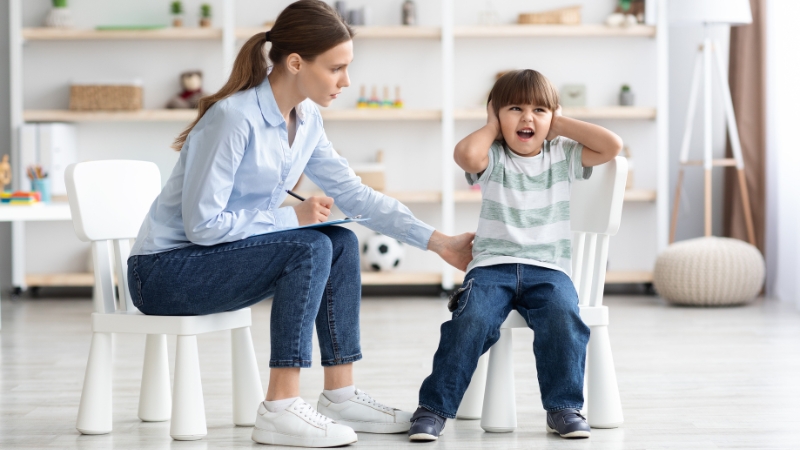
Sensory overload deserves a closer look when it is interfering with everyday life, not just creating occasional rough moments. That means problems with dressing, eating, sleeping, school attendance, leaving the house, play, grooming, or social participation.
It also matters if the child’s reactions seem extreme, frequent, or exhausting for the family.
Occupational therapists are often the professionals families are referred to for sensory issues. Child Mind Institute notes that children with these difficulties are often referred to OT and may receive sensory integration-based support.
NHS services also recommend speaking to a health professional or education professional when sensory processing difficulties are suspected.
Sensory Overload And Autism
Sensory overload is often discussed in autism because sensory differences are common there, but it is important not to oversimplify.
A child can have sensory sensitivities without being autistic, and an autistic child’s overload may also involve communication demands, social stress, and unpredictability on top of sensory input.
CDC notes that people with autism often have differences in the way they learn, move, or pay attention, and sensory sensitivities are part of the broader clinical picture for many of them.
That distinction matters because families sometimes either ignore sensory issues because “it is not autism,” or assume overload automatically means autism.
Neither is accurate. What matters first is the child in front of you and how much these reactions are affecting daily life.
The Bottom Line
@witherslackgroup 🫏 Bridgitte Calder, our Psychologist, uses Bukaroo to explain sensory overload. #WitherslackGroup #MentalHealth #SensoryOverload #Autism #ADHD ♬ original sound – WitherslackGroup
Sensory overload in children usually looks like a nervous system that has hit its limit. The signs can include covering ears, distress over clothing or touch, agitation, pacing, crying, bolting, shutting down, or melting down in places that are noisy, bright, crowded, or unpredictable.
The most effective solutions are concrete: reduce input, use fewer words, move the child to a calmer space, build predictable routines, and learn the child’s pattern. If overload is affecting dressing, eating, school, sleep, outings, or family life, it is worth raising with a pediatrician, school team, or occupational therapist.